Introduction to Qualitative Analysis
Qualitative analysis is the branch of chemistry practical that deals with the identification of substances present in a sample. Unlike quantitative analysis which measures amount, qualitative analysis focuses on:
- Identifying gases produced during reactions
- Identifying acids, bases and salts
- Testing for cations and anions
- Recognizing colours of precipitates
- Interpreting observations correctly
- Connecting laboratory evidence to chemical inference
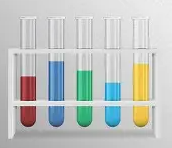
Test Tube Reactions
Most qualitative tests are carried out in test tubes using a few drops of reagents. Students must observe colour changes, precipitates and gases carefully.
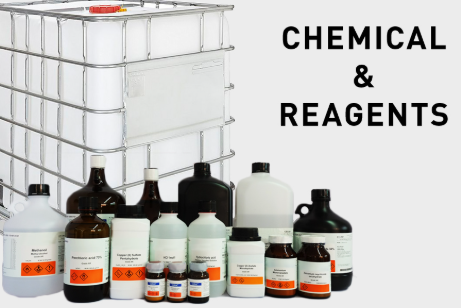
Chemical Reagents
Reagents such as NaOH, NH₃, AgNO₃, BaCl₂ and HNO₃ help identify unknown ions. Each reagent has a unique role in analysis.
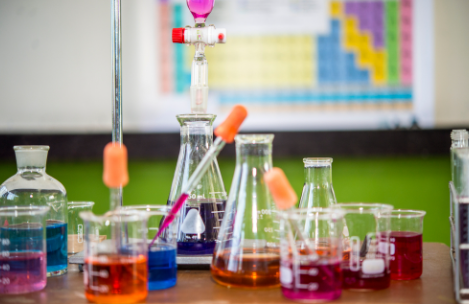
WAEC Practical Style
WAEC practical questions are designed to test observation, explanation, equations and interpretation of results.
Common Apparatus Used in Qualitative Analysis
Test Tube
Used for carrying out reactions involving small quantities of chemicals.
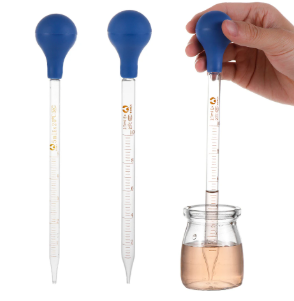
Dropper
Used for adding reagents dropwise during tests.
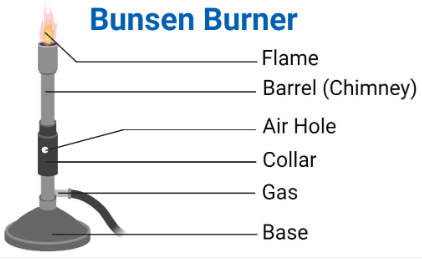
Bunsen Burner
Provides heat during warming and gas tests.

Filtration Apparatus
Used to separate filtrate from residue.
Safety Rules in the Chemistry Laboratory
- Never taste chemicals
- Do not smell gases directly
- Handle acids carefully
- Use goggles where necessary
- Wash hands after experiments
- Point heated test tubes away from people
Core Concepts Every WAEC Candidate Must Understand
| Concept | Meaning | WAEC Importance |
|---|---|---|
| Effervescence | Rapid bubbling due to gas evolution | Usually indicates carbonate reacting with acid |
| Precipitate | Solid formed from solution reaction | Colour helps identify ions |
| Filtrate | Liquid passing through filter paper | Used for further tests |
| Residue | Solid remaining on filter paper | Often analyzed separately |
| Inference | Meaning of an observation | Must match observations correctly |
Experiment 1 — Testing for Carbonate Using Acid
Aim
To identify carbonate ion using dilute acid and lime water.
Apparatus/Reagents
- Test tube
- Lime water
- Dilute HNO₃
- Lead(II) carbonate mixture
- Delivery tube
Procedure
- Put a small quantity of sample into a test tube.
- Add dilute HNO₃ carefully.
- Observe effervescence.
- Pass evolved gas into lime water.
- Observe the change in lime water.
Chemical Equations
PbCO₃(s) + 2HNO₃(aq) → Pb(NO₃)₂(aq) + CO₂(g) + H₂O(l)
CO₂(g) + Ca(OH)₂(aq) → CaCO₃(s) + H₂O(l)
Inference
Carbonate ion is present. Carbon dioxide gas evolved.
Teacher
Students, notice that the gas produced is colourless. You must NEVER write only “gas evolved”. WAEC expects FULL observations.
Student
Sir, why does lime water turn milky?
Teacher
Excellent question. Carbon dioxide reacts with calcium hydroxide in lime water to form insoluble calcium carbonate which appears milky.
Teacher Practical Breakdown
- Bubbles = gas formation
- Gas + lime water → milky = CO₂ confirmed
- Carbonates react with acids to release CO₂
- This reaction is common in baking powder and antacid tablets
Experiment 2 — Testing for Starch Using Iodine
Aim
To test for starch in a sample using iodine solution.
Procedure
- Place a little quantity of sample on a watch glass.
- Add 2 drops of iodine solution.
- Observe colour change.
Inference
Starch is present.
Theory
Iodine molecules fit into the spiral structure of starch forming a blue-black complex.
Teacher
This is one of the most famous food tests in chemistry. WAEC likes using starch because the colour change is sharp and easy to observe.
Student
Sir, can iodine test sugar?
Teacher
No. Iodine specifically tests starch. Simple sugars like glucose do not produce blue-black colouration.
Real-Life Application
- Food industries test starch in products
- Used in quality control
- Used in biology food tests
- Used in pharmaceutical industries
MASTER WAEC CLASSROOM — HOW EXAMINERS MARK
Teacher
Candidates fail practical chemistry mainly because they memorize instead of understanding. WAEC examiners look for:
- Correct observation
- Correct inference
- Correct equations
- Neat recording
- Accurate chemical language
Golden WAEC Practical Secrets
- Write observations BEFORE inference
- Always mention precipitate colour
- State whether precipitate dissolves or not
- Use proper chemical names
- Write equations correctly
- Use proper state symbols where needed
Common Mistakes Candidates Make
- Writing “white colour” instead of “white precipitate”
- Confusing NH₃ with NaOH reactions
- Ignoring excess reagent behaviour
- Writing equations without balancing
- Failing to warm gently during gas tests
Professional Chemistry Reasoning
A professional chemist thinks logically:
- What was added?
- What happened?
- Why did it happen?
- Which ion causes it?
- What equation explains it?
Recommended Practical Video Lessons
Preview of Part 2
In Part 2, students will learn:
- Cation analysis using NaOH and NH₃
- Identification of Pb²⁺, Zn²⁺, Al³⁺, Fe²⁺ and Cu²⁺
- Behaviour of precipitates in excess reagents
- Anion analysis using AgNO₃ and BaCl₂
- Advanced WAEC practical interpretation
- Real WAEC-style qualitative analysis tasks